
5 min read
Read →
Neuropsychiatry
5 min read
•
Published on September 24, 2026
Anxiety, Panic Attack or Heart Problem? | Malda Guide
👨⚕️
Dr. Mozaffar Hossain, MD
Clinical Specialist • SHIHA Wellness Clinic
🌿 Key Clinical Takeaways
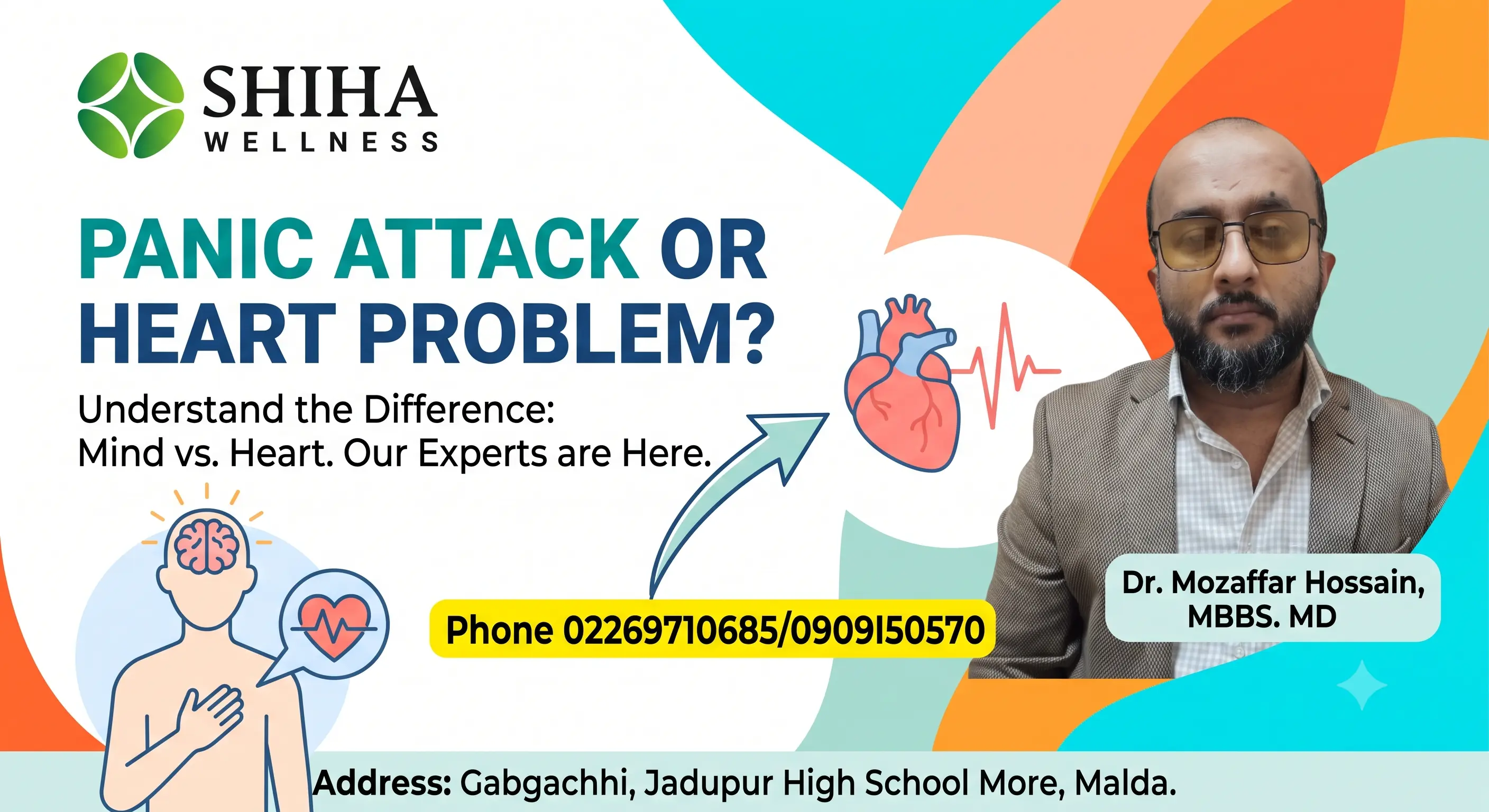
Sudden palpitations, chest tightness and a fear that something is terribly wrong can be frightening. This guide explains how panic attacks differ from heart problems, which warning signs need emergency care, and how a neuropsychiatrist in Malda can help you find relief.
Anxiety, Panic Attack or Heart Problem? Symptoms, When to Seek Help & Treatment in Malda
Your heart is pounding. Your chest feels tight. Your hands are trembling, and a thought flashes through your mind: "Is this a heart attack?"
If this has happened to you, you are not alone. Many people in Malda and across West Bengal visit emergency rooms or cardiologists with these symptoms, only to be told their heart is normal. The cause is often a panic attack or anxiety disorder. But chest symptoms should never be ignored, so it is important to understand the difference.
If it is happening right now
Sit down and loosen tight clothing.
Breathe slowly: inhale through your nose for 4 seconds, then exhale gently through your mouth for 6 to 8 seconds. Repeat for a few minutes.
Remind yourself: "This feels awful, but panic attacks peak within about 10 minutes and then fade."
Ground yourself: name 5 things you can see and 4 things you can touch.
Go to the nearest emergency department immediately if the chest pain is heavy, crushing or pressure-like, spreads to your left arm, jaw, neck or back, comes with cold sweat, vomiting or fainting, starts during physical effort, or does not settle within a few minutes. If you are unsure, treat it as an emergency. It is always safer to get your heart checked first.
বুক ধড়ফড় করছে? এটা কি anxiety?
বুক ধড়ফড়, বুকে চাপ ধরা, শ্বাস নিতে কষ্ট, হাত-পা কাঁপা বা হঠাৎ মনে হওয়া "আমি মারা যাচ্ছি" — এগুলো panic attack বা anxiety-র খুব পরিচিত লক্ষণ। তবে একই লক্ষণ হার্টের সমস্যাতেও হতে পারে। তাই প্রথমবার এমন হলে, বা বুকের ব্যথা বেশি হলে, আগে হার্ট পরীক্ষা করানো জরুরি। হার্ট ঠিক থাকলে মানসিক স্বাস্থ্য বিশেষজ্ঞের পরামর্শ নিন। এর চিকিৎসা আছে, এবং বেশিরভাগ মানুষ ভালো হয়ে ওঠেন।
What is a panic attack?
A panic attack is a sudden surge of intense fear or discomfort. It usually peaks within minutes and can happen even when there is no real danger. Common symptoms include:
Racing or pounding heartbeat (palpitations)
Chest tightness or discomfort
Shortness of breath or a feeling of choking
Sweating, trembling or shaking
Dizziness or light-headedness
Tingling or numbness in the hands or face
Nausea or stomach discomfort
Fear of losing control, "going mad" or dying
Repeated panic attacks, or constant worry about having another one, may point to panic disorder or a wider anxiety disorder.
Panic attack vs. heart problem: how they can differ
Panic attack / anxiety Possible heart problem
Onset Often sudden, sometimes after stress or worry Often during physical effort, but can also occur at rest
Pain type Sharp, stabbing or tight; may shift around Pressure, heaviness or squeezing
Spread Usually stays in the chest May spread to arm, jaw, neck or back
Duration Peaks in about 10 minutes, then eases May persist or keep returning
Other signs Tingling, fear, fast breathing, trembling Cold sweat, breathlessness, nausea, fainting
An important caution: these differences are general guides, not a diagnosis. Overlap is common, and people with diabetes, high blood pressure, high cholesterol, a family history of heart disease, or who smoke, or those over 40, should have chest symptoms evaluated by a doctor first. A panic attack can only be confidently diagnosed after a heart cause has been reasonably ruled out.
When should you see a psychiatrist?
Consider a consultation if:
Your heart tests (ECG, echo, blood tests) are normal but the symptoms keep returning
You have had repeated panic attacks or fear having another one
You avoid places, travel or activities out of fear of an attack
Constant worry, restlessness or poor sleep is affecting work, studies or family life
You are relying on frequent ER visits or repeated tests for reassurance
Anxiety has begun to cause low mood, irritability or difficulty concentrating
How anxiety and panic disorder are treated
Anxiety and panic disorder are common, medical conditions, and they respond well to treatment. Depending on your needs, a plan may include:
A detailed clinical assessment to understand your symptoms and rule out other causes, including neurological or medical contributors
Psychotherapy, especially Cognitive Behavioural Therapy (CBT), which helps you understand and manage panic
Medication, when appropriate, prescribed and monitored by a qualified psychiatrist
Breathing and relaxation training
Lifestyle guidance on sleep, caffeine, screen use, exercise and stress management
Follow-up and support for you and your family
Treatment is individualised, and results vary from person to person. Seeking help early usually makes recovery easier.
Anxiety treatment in Malda: what to expect at your visit
At our neuropsychiatry clinic in Malda, your first visit is unhurried and confidential. The doctor will listen to your story, ask about your symptoms, sleep, stress and medical history, review any reports you have brought, and explain what is likely happening in simple language. You will leave with a clear plan and answers to your questions.
Looking for a psychiatrist in Malda? You do not have to keep suffering in silence, and you do not need to wait until things feel unbearable.
📞 Book an appointment: Phone 9090050570 | WhatsApp 02269710685
📍 Clinic address: Gabgachhi, Jadupur High School More, Malda.
🕒 Timings: [everyday 9am to 5pm]
Frequently Asked Questions
Can anxiety really cause chest pain and palpitations?
Yes. Anxiety triggers the body's stress response, which speeds up the heart and tightens chest muscles. Because heart conditions can feel similar, a first-time or severe episode should be checked medically.
How long does a panic attack last?
Most panic attacks peak within about 10 minutes and settle within 20 to 30 minutes, though you may feel drained afterwards.
Can a panic attack cause a heart attack?
Panic attacks are frightening but are not known to cause heart attacks in healthy hearts. They can, however, be mistaken for one, which is why proper evaluation matters.
Is panic disorder curable?
Many people recover fully or learn to manage symptoms very well with the right treatment. Outcomes vary, and a psychiatrist can guide you on what to expect in your case.
Should I see a cardiologist or a psychiatrist first?
If you have chest pain, especially for the first time, or risk factors for heart disease, get your heart checked first. If your heart tests are normal and symptoms keep recurring, see a psychiatrist.
Is treatment confidential?
Yes. Your consultation and records are kept private.
Disclaimer: This article is for general information and does not replace medical advice. If you have severe chest pain, difficulty breathing or fainting, seek emergency care immediately.
⚠️ Medical Education Notice:
This article is intended for educational and informative purposes only and does not substitute professional in-person medical diagnosis, prescription, or clinical consultation. Always seek direct medical guidance from qualified physicians at SHIHA Wellness Clinic for personalized care.
←
Back to All Articles
Need Clinical Guidance?
Explore More
Related Health Articles
 Neuropsychiatry
Bipolar Disorder: Mood Swings or a Treatable Mental-Health Condition? Warning Signs for Families
5 min read
Read →
 Neuropsychiatry
Migraine, Chronic Headache and Stress: When Should You See a Neuropsychiatry Specialist?
5 min read
Read →